
JEHOVAH’S
WITNESSES
JEHOVAH’S
WITNESSES
More than 11 years revealing secrets because there is no excuse for secrecy in God’s true religion – The Watchtower, June 1st 1997; Dan 2:47; Matt 10:26; Mark 4:22; Luke 12:2; Acts 4:19, 20.
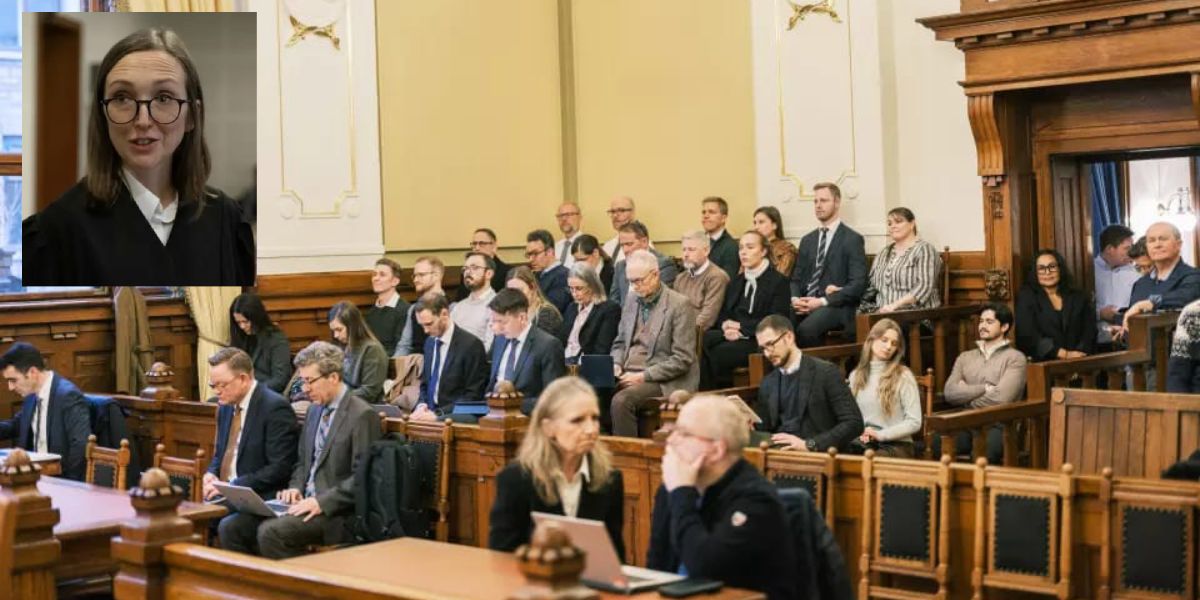
Written and Published By: Miss Usato, Last Updated: February 5th, 2026
AvoidJW has this Supreme Court Hearing streaming Live on our Homepage. Below is a summary with quotes from the Translations of each day.
“Religious autonomy certainly helps to ensure the individual’s freedom of religion, but it undermines the protection of rights in the Convention if members do not have a real opportunity to leave the community.”
– Liv Inger Gjone Gabrielsen
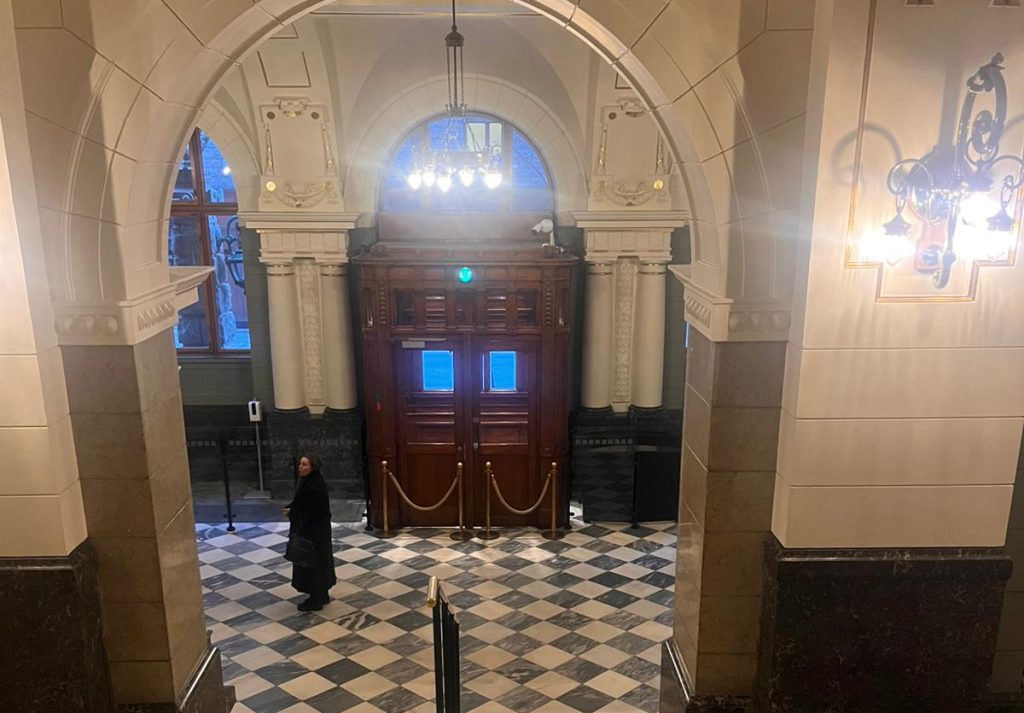
Supreme Court house, Norway – Day one opened with the State’s arguments presented first, setting the legal framework the Supreme Court will examine throughout the week.
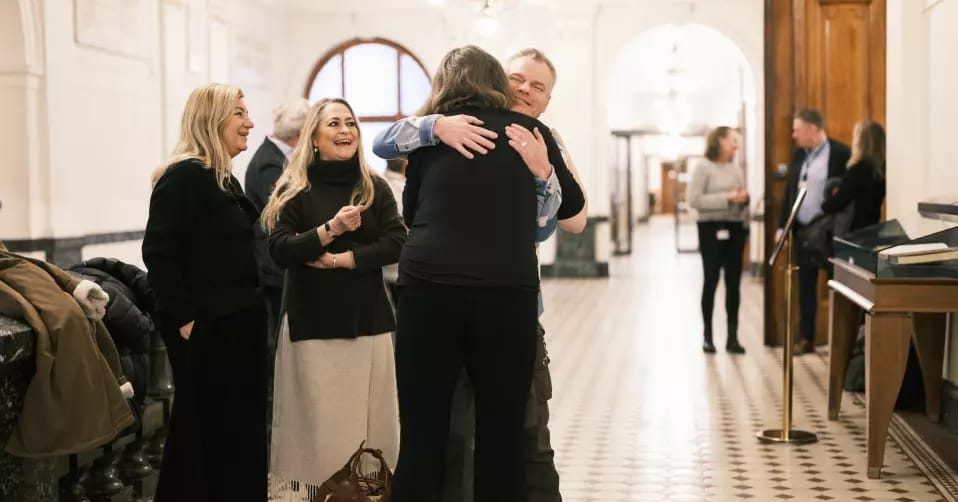
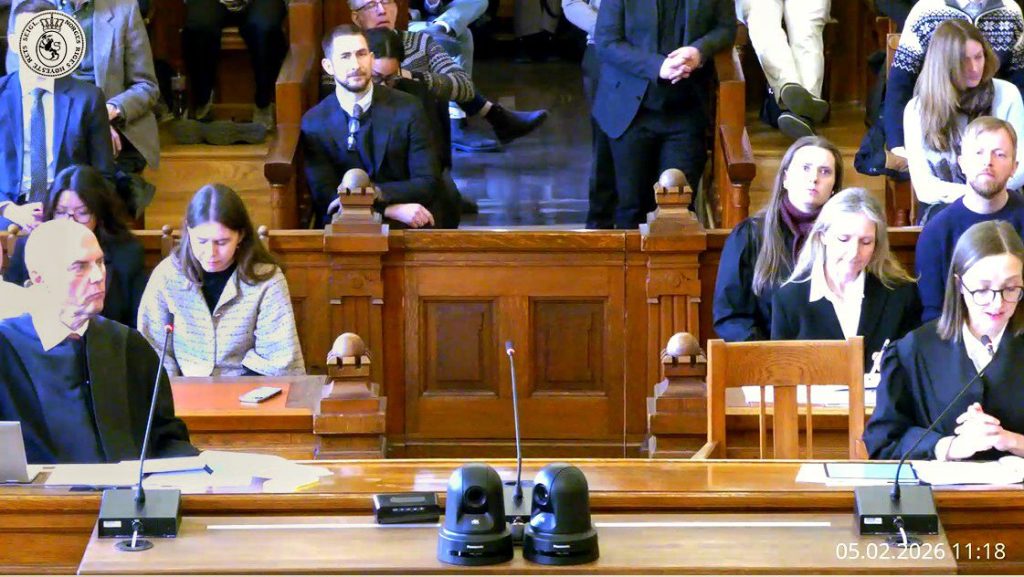
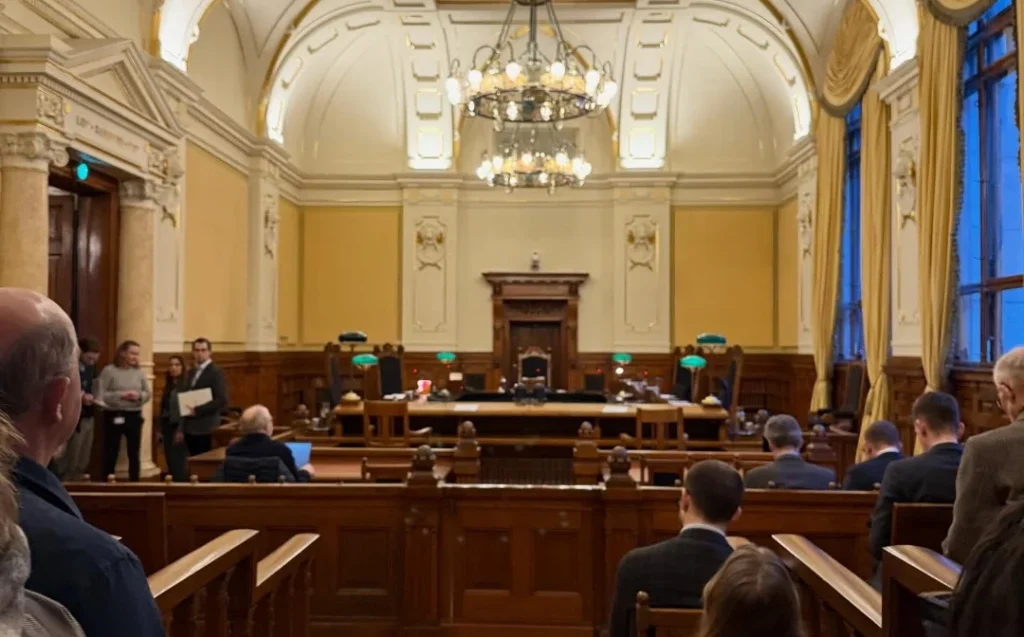
In the Second Division Courtroom, by 08:20 A.M., Reports from Former Jehovah’s Witnesses present said the Supreme Court courtroom was already packed with press and Jehovah’s Witnesses. At 09:00, the State opened its case with Liv Inger Gjone Gabrielsen, who has been the Government’s attorney for the Case. This hearing goes until February 9th, 2026, with 4 breaks in between.
From the start, Liv’s argument wasn’t just about subsidies. It was about a boundary: the difference between religious freedom and the individual’s freedom to opt out without coercion. “Religious freedom” doesn’t include trapping people inside.
Liv acknowledged that religious communities have autonomy, but not autonomy without limits. Under the European Convention on Human Rights (ECHR), she argued, the foundational unit isn’t the organization. It’s the person. “The individual is the basic unit within the ECHR.” Autonomy is protected only because it serves individual freedom: “The autonomy of religious communities should ensure the religious freedom of its members.”
Then came the line that effectively summarized the State’s posture for the entire day: “Religious autonomy certainly helps to ensure the individual’s freedom of religion, but it undermines the protection of rights in the Convention if members do not have a real opportunity to leave the community.”
Liv’s position was explicit: some people can’t leave because of “absolute obstacles,” and the State argues there must be limits on the kinds of obstacles a religious community is allowed to impose. “There are limits to what kind of obstacles a religious community can place on people who want to leave.”
“Examples of violations that may provide grounds for refusing subsidies include negative social control against children, psychological violence, forced participation, and gender-based restrictions.” – Liv Inger Gjone Gabrielsen
The State anchored its case in Norway’s Religious Communities Act, emphasizing that registration and subsidies are privileges, not prerequisites for religious life. “Registration is not a condition for calling oneself a religious community, or for activities as a religious community.”
The State’s point: Jehovah’s Witnesses can practice freely regardless. But government funding is conditional, and can be denied if a group’s practices violate rights. Liv laid out the types of conduct that can justify denying subsidies: “Examples of violations that may provide grounds for refusing subsidies include negative social control against children, psychological violence, forced participation, and gender-based restrictions.”
She emphasized that the legal test is not about proving intent. It is about effect, especially on children: “It is enough that the effect is directed at children.”
Liv also clarified that the law is not limited to child-related harms: “Various forms of negative social control can also fall under this… the concern is not only children.” She drew a line between adults choosing to follow rules and coercion that crosses into rights violations: “If adult members are of their own free will follow such rules, they cannot necessarily be perceived as violations under this provision.”
But she immediately added that the provision can still capture communities that prevent exit or exploit vulnerability: “The condition can also affect communities that prevent girls from leaving, or that exploit the fact that a member is in a vulnerable position, due to disability, illness, or age.”
“This is not just something expressed on paper. This is something they do. It is a teaching that is followed and practiced.” – Liv Inger Gjone Gabrielsen
Liv repeatedly relied on the Court of Appeal’s findings on Jehovah’s Witnesses’ shunning practices, emphasizing that the lower court concluded the treatment of excluded members closely follows the organization’s own written doctrine. “The practice toward excluded persons is essentially in line with what is described in Jehovah’s Witnesses’ own texts.”
She stressed that this was not merely theoretical. “This is not just something expressed on paper. This is something they do. It is a teaching that is followed and practiced.”
The State rejected comparisons to other religious communities, arguing that it is not aware of any other group that applies such a systematic and formalized form of shunning. While Jehovah’s Witnesses have pointed to individual members who maintain limited contact with former members, Liv said those examples do not reflect the official practice. “It does not change the fact that the religious community teaches that contact should be kept to an absolute minimum.”
She also dismissed descriptions of the practice as “mild social distancing.” “This is not about mild social distancing. It is about being shut out.”
According to the State, the practice is clearly attributable to Jehovah’s Witnesses as a religious community, with rules set out in its own texts, formally announced to congregations, and reinforced through internal sanctions for those who do not comply.
The State argued that JW “membership” is not merely a private identity. It is entered through baptism, and that baptism often occurs during adolescence, with examples in evidence even younger. Liv noted that the Court of Appeal described baptism as typically occurring around 15–18, but also cited evidence of baptism at 11, and emphasized: “There is no lower age limit.”
She then read from a Watchtower article used to show how the organization communicates baptism to minors: “The Bible says nothing about having to be an adult… someone who is young can still understand what is right.”
And: “Young people who love Jehovah and who understand what it means to dedicate themselves do not hesitate to be baptized.”
Liv’s implication was clear: baptism is treated as a mature commitment, but it is encouraged early, while the consequences (including exclusion and shunning) apply to minors as well as adults.
“The wording ‘social distancing’ is, in the State’s view, misleading.”
– Liv Inger Gjone Gabrielsen
A major moment was Liv’s critique of the Court of Appeal’s wording. The Court used a phrase equivalent to “social distancing” to describe how members treat excommunicated people. Liv argued that the term is misleading, too sanitized, too pandemic-coded, and not reflective of the actual social reality. “The wording ‘social distancing’ is, in the State’s view, misleading.”
She explained that in English-language literature, the concepts are clearer: “Disfellowshipping describes the action from the community’s side, while shunning describes what the remaining members do.” She expressed that the more accurate framing is avoidance/shunning, not casual distance.
Liv walked through the Court of Appeal’s description: the general rule is to avoid excluded or resigned members, with exceptions for those in the same household and for “necessary family matters.” But she also highlighted the enforcement mechanism: if members violate shunning expectations, they can themselves face discipline.
From JW publications, she quoted: “We have no spiritual or social fellowship with excluded persons.” And the warning: “Just saying hi to someone can develop into a whole conversation… and maybe even a friendship.”
Then she tied it directly to the elders’ manual (Shepherd the Flock), where “unnecessary association” can be treated as “shameless conduct”: “Unnecessary association with excluded ones or those who have withdrawn.” And crucially, she read the line showing how this can escalate: “A judicial committee shall not be set aside unless there is permanent spiritual fellowship or persistent open criticism of the decision.”
The State’s point: this is not informal social drift. This is a structured practice with consequences.
Liv told the court there is no direct European Court of Human Rights case defining what counts as a violation of “the right to leave a religion”: “There is no judgment… that directly concerns what would constitute an interference or a violation of the right to leave a religious community.”
So, she argued, the Supreme Court must reason from adjacent case law, especially cases where people were effectively compelled to remain members of organizations (trade unions), and where the courts asked whether opt-out was truly possible in practice.
Her key principle: “What matters is not what is true in theory, but an assessment of the actual situation when leaving.” That becomes central when leaving costs a person their family network, social world, and practical support.
Liv argued the Court of Appeal made three mistakes in its assessment:
Mistake #1: The Court of Appeal underestimated how much resignation/exclusion changes contact even within the household (no “spiritual fellowship,” meaning no shared religious life even at home).
Mistake #2: The Court of Appeal underestimated how much resignation/exclusion changes contact with family outside the household, where “necessary family matters” is a narrow exception.
Mistake #3: The Court of Appeal wrongly assumed that contact with people outside the religion (the rest of society) meaningfully reduces the harm of losing family and friends inside the religion. Liv argued that for a typical JW, most of their network is internal, so the “dampening effect” of outside contacts is minimal.
In Liv’s framing, the Court of Appeal didn’t fully measure what the State calls the real-world exit cost.
“Ostracism threatens four fundamental social needs: belonging, self-esteem, control, and meaningful existence.”
– Pastoral Psychology
A key moment in the State’s presentation came when Liv addressed point 353 of the Court of Appeal’s ruling, titled “The experience of lost contact.” This section, she argued, captures the real impact of Jehovah’s Witnesses’ withdrawal practices.
Although much of the evidence describes exclusion, Liv stressed that this is not a distinction with legal significance: “They are treated in the same way.” Whether a member is excluded or withdraws voluntarily, the consequence is the same: loss of family, loss of friends, and loss of one’s social world. This, Liv noted, is also central to the assessment of children’s rights, since children are subject to the same practices under different labels.
Jehovah’s Witnesses point to exceptions allowing limited contact, within the household or in “necessary family matters.” But Liv said these exceptions do little to change reality. “They are not big exceptions. They do not weigh up for this to a very large extent.” For most members, she explained, nearly all meaningful relationships exist inside the religious community. “The actual situation is that you have little to go on when you face this choice, whether to stay or quit.”
Liv framed the decision facing baptized members in stark terms: “If you are a baptized member and you no longer believe, you have two choices. Either you leave, or the consequence is loss of family and friends. Or you stay, without the possibility of living in line with your own convictions.”
People’s circumstances differ, she acknowledged, but the pressure mechanism is the same: “Close family relationships and social networks are, for many, strong means of pressure.”
Liv reminded the Court that family life is a legally protected interest: “Family is fundamental in a person’s life. That is why family life is protected under the Constitution and Article 8 of the ECHR.” Leaving also means losing friendships, relationships that shape identity and provide meaning and resilience.
To illustrate the impact, Liv cited research published in Pastoral Psychology on former Jehovah’s Witnesses. Studies on ostracism show that social exclusion causes severe psychological harm: “Ostracism threatens four fundamental social needs: belonging, self-esteem, control, and meaningful existence.” Research on former Witnesses in several European countries found that for around one-sixth of participants, leaving the community led to the breakdown of a core relationship, such as a marriage, events strongly linked to poor health outcomes.
Witness testimony reinforced this picture. One former member described wanting to leave for seven to eight years, but remaining “inactive” instead to avoid being cut off: “I didn’t quit because of the cost it entails. I didn’t want to be an outcast.” Another said the fear of losing family, friends, housing, and work left him “completely locked” inside the community. Liv emphasized that the absence of people who were absolutely unable to leave does not weaken the State’s case: “It does not require absolute obstacles. A practice can still be suited to prevent withdrawal.”
Finally, Liv addressed claims that members are free to follow their conscience. She pointed to testimony from Geoffrey Jackson, a member of Jehovah’s Witnesses’ Governing Body, acknowledging that there is no room for flexibility in the rules on shunning. “You can call it conscience, but there is a clear expectation to comply.”
The State’s conclusion was direct: “You can consent to many things within a religious community. But if you are not protected against conditions that prevent withdrawal, consent cannot legitimize the practice.”
The State argued that the case does not rest solely on the right to withdraw. Even if the Court were to disagree on that point, Liv said the denial of subsidies is still justified because the practices conflict with children’s rights, particularly the right to protection from psychological violence and negative social control. Liv rejected the idea that these protections are limited only to the UN Convention on the Rights of the Child. “There is nothing in the wording or the preparatory work that supports such a limitation.”
She pointed to Article 19 of the Convention, which obligates states to protect children from all forms of physical and psychological violence, regardless of intent or frequency. According to the State, international guidance makes clear that psychological harm does not require repeated or extreme acts to qualify.
The Court of Appeal, Liv argued, set the bar too high by requiring a persistent pattern of mistreatment similar to criminal-law thresholds. “Frequency, severity, and intent are not prerequisites for something to constitute psychological violence.”
Finally, Liv addressed claims that minors are rarely affected. She noted that Jehovah’s Witnesses themselves acknowledged that at least one minor had been excluded in Norway at the time of the subsidy appeal, and that updated internal guidelines still allow for minors to be removed from the congregation.
What matters, she said, is not how often exclusion occurs, but what the practice is suited to do. “The decisive question is how the practice works, and what harm it is likely to cause.”
Finally, the State turned to what it has described as an independent and decisive basis for denying subsidies: children’s rights, including protection from psychological violence and negative social control.
Liv emphasized that Norway’s human-rights obligations do not stop at refraining from violations by the State itself. In certain circumstances, those obligations require intervention in harmful private systems, including within religious communities, when established practices undermine Convention protections. She also flagged what lies ahead for the Court: there is no direct, “plug-and-play” judgment from Strasbourg that defines when pressure on the right to leave a religious community crosses the legal threshold. That task now falls to the Supreme Court, which must draw the line using broader case law on coercion, pressure, and freedom of association.
At its core, today’s hearing was not about theology, but about consequences. The State made it clear that religious freedom does not include the right to construct systems where leaving means losing one’s family, social world, or sense of safety, particularly for children. When internal rules are enforced through isolation, stigma, and fear, they cease to be private beliefs and instead function as mechanisms of control.
Liv grounded this argument not only in the testimony of former Jehovah’s Witnesses but in the organization’s own literature. Texts such as God Is Love and the elders’ handbook describe in explicit terms how members, including children, are to be treated when they are excluded or withdraw. The practices described are not incidental; they are taught, structured, and enforced.
On Friday, February 6, the hearing continues with Watchtower’s defense counsel, Ryssdal, presenting the organization’s case. The Supreme Court is now being asked to decide whether public funds can support a religious community whose own practices make freedom of conscience conditional on personal loss, and whether the State has a duty to intervene when those costs are borne by the most vulnerable.
Elders’ Book: Download a Copy in your language
JW Publication: Keep Yourselves in God’s Love
JW Publication: What Can the Bible Teach Us?
Furuli’s Website: My Beloved Religion
VARTLAND February 5th, 2026: Dissenters come from far and wide to follow the Jehovah’s Witnesses case
Office of the Attorney General, representing the State of Norway
Glittertind AS Law Firm representing Jehovah’s Witnesses
Reporter
Translator
Analysis