
JEHOVAH’S
WITNESSES
JEHOVAH’S
WITNESSES
More than 12 years revealing secrets because there is no excuse for secrecy in God’s true religion – The Watchtower, June 1st 1997; Dan 2:47; Matt 10:26; Mark 4:22; Luke 12:2; Acts 4:19, 20.
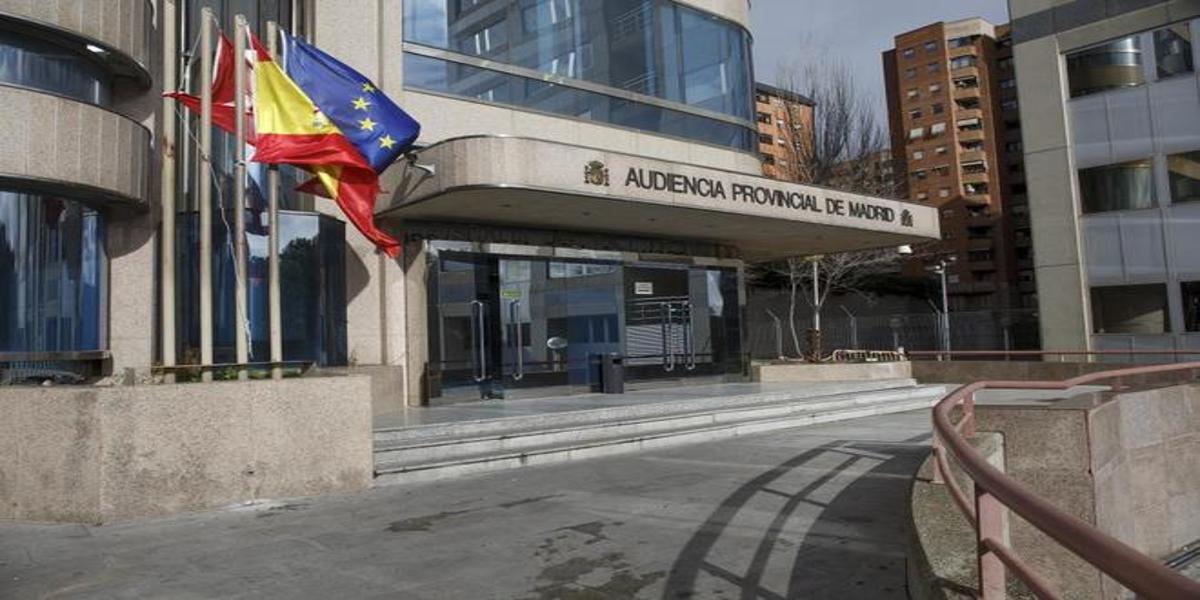
Audiencia Provincial de Madrid, Spain
Written and Published by: Miss Usato
Spain’s judiciary has drawn a decisive line: calling Jehovah’s Witnesses a “secta destructiva” (destructive sect) can be legally protected speech.
In April 2026, the Audiencia Provincial de Madrid upheld a lower court ruling in favor of the Asociación Española de Víctimas de los Testigos de Jehová (AEVTJ), confirming that former members have the right to publicly criticize the organization using strong language rooted in their experiences.
The case that set the tone
The dispute began after Jehovah’s Witnesses filed a lawsuit seeking to dissolve the victims’ association of Jehovah’s Witnesses and set out to remove its messaging. The group had described the religion as a “sect” and raised concerns about practices like social shunning and internal control.
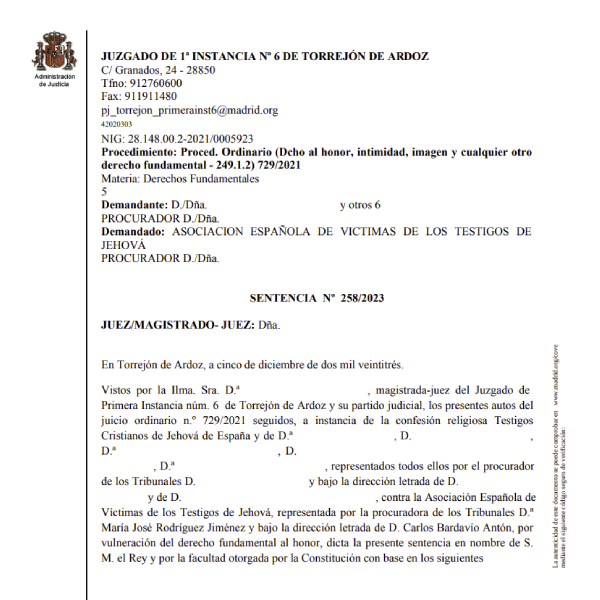
In December 2023, a Madrid-area court rejected the claims entirely. The judge ruled that:
The ruling also referenced the Royal Spanish Academy (RAE) definition of “secta,” describing it as a closed community with strong internal authority, a context the court found relevant to the criticism.
Here is the full judgment PDF in Spanish:
The document is 20+ pages long; below is a summarized version in English.
The Audiencia Provincial de Madrid didn’t just affirm the earlier decision; it strengthened it. According to the report, the court found that:
The court emphasized that these perspectives stem from first-hand accounts, giving them legitimacy in public discourse.
A Shift in Legal Strategy
This ruling signals a broader shift:
In effect, Spain is moving from protecting institutional reputation to scrutinizing organizational behavior.
Spain’s courts have made one thing clear: Criticism, even harsh criticism, of religious organizations is protected when grounded in lived experience.
Key Sections of Spanish Court Judgment (Dec 5, 2023)
1. Background of the Case
The Jehovah’s Witnesses organization filed a lawsuit against the Spanish Association of Victims of Jehovah’s Witnesses, requesting:
The association had publicly described Jehovah’s Witnesses as a “sect” and a “destructive sect,” and presented itself as representing victims of the organization.
2. Core Legal Question
The court evaluated whether:
3. The Court’s Definition of “Sect”
The judge explicitly addressed the meaning of the term:
“The word ‘sect’ is defined by the Royal Spanish Academy as a closed community of a spiritual nature, guided by a leader who exercises charismatic authority over its followers.”
The court further explained that the term implies:
4. Key Finding: Calling Them a “Sect” Is Not Illegal
The judge ruled that:
Referring to Jehovah’s Witnesses as a “sect” is not, in itself, defamatory, especially when linked to specific behaviors being criticized.
The court emphasized that:
5. On “Destructive Sect”
This is one of the most important parts of the ruling:
The classification of Jehovah’s Witnesses as a “destructive sect” must be understood as protected by freedom of expression.
The court determined that:
6. Religious Status Does NOT Block Criticism
The court directly addressed the fact that Jehovah’s Witnesses have legal recognition in Spain:
Their status as a religious organization with “notorio arraigo” (official recognition) does not prevent criticism, nor does it invalidate the association’s statements.
This is a major legal point:
7. On Victims’ Testimonies
The court accepted that:
8. No Evidence of Unlawful Harm
The judge concluded that:
9. Final Decision
The court: