
JEHOVAH’S
WITNESSES
JEHOVAH’S
WITNESSES
More than 12 years revealing secrets because there is no excuse for secrecy in God’s true religion – The Watchtower, June 1st 1997; Dan 2:47; Matt 10:26; Mark 4:22; Luke 12:2; Acts 4:19, 20.
Written by: Jan Frode Nilsen and Miss Usato
Published by: Miss Usato, May 4th, 2026
Norway’s Supreme Court ruling in HR-2026-1009-A has been framed as a clear win for Jehovah’s Witnesses. Legally, that’s accurate. Strategically, it’s incomplete.
A closer read shows something far more nuanced: the Court validated the State’s core concerns, but ultimately ruled that the legal threshold for intervention had not been met -yet. This article is written with Jan Frode Nilsen
The Case: Not About Belief – About Boundaries
Click this link to read the full Verdict: Norway Supreme Court Verdict
The Verdict has 229 Points. This article is a breakdown for the public of what the verdict expresses. From the start, the government’s position was clear: This case was not about controlling religion. It was about whether a religious system that pressures members not to leave should receive public funding.
The Court agreed on the framework. The issue was rights, specifically, the right to exit a religion freely (points 4, 57). That distinction matters. Because once public money is involved, neutrality is no longer passive; it becomes accountability-driven.
Let’s cut through the noise: The Supreme Court explicitly acknowledged that Jehovah’s Witnesses’ practice of shunning can create “clear psychological pressure” not to leave (point 123). That is the highest court in Norway, recognizing the exact harm the government acted on. The disagreement wasn’t whether pressure exists. It was whether it had been proven at a sufficient scale and intensity. You can only imagine how this feels to those who have been disfellowshipped and cut off from their friends and family, especially when it’s written and taught to do so, right in their own literature. Watchtower, April 2013: “Family members who are not part of the household should avoid unnecessary association.”
Jan Frode Nilsen: “You are not free to opt out if opting out has major consequences for completely elementary contact with your immediate family. Their parents, their siblings, their children. Then, for the vast majority, it is a forced situation.”
(Point 44) “The terminology used to describe the practice toward former members has been disputed between the parties. In English-language literature about Jehovah’s Witnesses, the practice is often referred to as “shunning.” In the religious community’s own texts, there are also examples where the practice is described as “to shun” a former member. In Norwegian translations, the terminology has varied, including expressions such as “expel” and “avoid contact with.”
Jan Frode Nilsen: “This is interesting. The Supreme Court chooses not to use Watchtower’s words to describe the shunning, as they feel Watchtower is undercommunicating, so they chose to use the Norwegian word close to shunning, instead.”
This Is Not Informal Behavior – It’s Structured
The government’s case also rests heavily on one point: This is not just social behavior, it’s systemic. And the Court’s own findings support that structure:
So this is not a loose network of individuals making personal choices. It is a hierarchical organization with defined behavioral expectations.
The dissent cuts straight to it: This appears not as guidance, but as a rule-based system (point 185). The Court did not dispute the underlying practice, that Members who leave are expected to be socially excluded, even by close family members outside the household (point 39).
And the dissent makes the functional impact explicit:
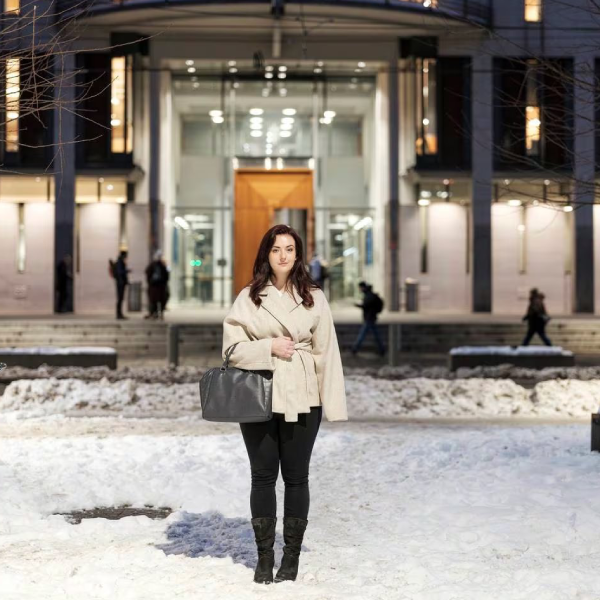
That is not incidental but behavioral enforcement. This reminds me of Noomi Pilot’s fears she had growing up as a Jehovah’s Witness. She testified in the Norway Trial of 2024. “Living at home as an outcast was mentally taxing.” Noomi broke down in the courtroom as she expressed that in the moment of expulsion in front of her parents, she felt a profound sense of loneliness. She also talked about the challenging process of rebuilding her life, grappling with complex PTSD, severe anxiety, and depression.
The Dissent: A Government Case Waiting for a Majority
In the verdict point 103, the Supreme Court makes a significant concession: “Given the potential that the practice of exclusion has to affect the mental health of minors, I would not rule out that children’s rights could be considered violated in individual cases.” At the same time, the Court stops short of ruling against Jehovah’s Witnesses because the evidentiary record was too limited, and only one minor had been documented as excluded since 2021. Crucially, the Court leaves the door open: “the assessment of children’s rights could change if an exclusion practice of a certain scope can be demonstrated.” In other words, the concern is acknowledged, but not sufficiently proven in this case.
Jan Frode Nilsen: “So the Supreme Court says that the practice in itself has the potential to violate children’s mental health, and in single instances, be a violation of their rights. If there is proof that the practice is aimed at children, then the decision would change. This is the Supreme Court giving us the right in theory, if there is ever evidence that WT shuns children, everything changes.”
Read alongside the dissent, which argues the State should be able to act where there is a “real and immediate risk” (points 175–176), the conclusion is hard to miss: this was not a rejection of the government’s argument, but a case that turned on how much proof is enough, and it came within a single vote of going the other way.
Children: The Case’s Breaking Point

The government focused heavily on minors, as needed. The Court acknowledged that baptism often occurs at ages 15–18 (points 92–93) and that exclusion can have serious consequences for vulnerable youth (point 100).
Yet the majority ultimately assumed these minors are sufficiently informed when making religious commitments. That assumption is where the legal tension sits, and where future challenges will likely concentrate.
(Point 191) “In my view, however, the consequences are more serious than the justice delivering the lead opinion assumes. This applies particularly to the significance of lost contact with family members, and especially to the impact on children who resign- in practice, minors between the ages of 15 and 18.
Admittedly, contact is maintained with family members who leave but remain part of the same household. A child who resigns will therefore continue to have contact with their parents and siblings who still live at home and remain members. However, the child who has left can no longer have spiritual fellowship with the rest of the family.
For members of Jehovah’s Witnesses, religion and spiritual fellowship with other members are central to life. Witnesses who testified before the Court of Appeal described how this spiritual fellowship occupies a substantial portion of members’ free time, including meetings, study, and fieldwork. Jehovah’s Witnesses have not disputed this. If a child resigns, contact with the rest of the family who remain members will therefore change and be significantly reduced.”
Jan Frode Nilsen: “With this dissent…. It’s insane that we only needed one more Judge out of the five to see this.”
The Outcome and What It Signals

The appeal was dismissed, the funding refusal invalidated, and the State was ordered to pay NOK 2,165,461 in costs (point 230).
But the judgment’s broader signal is more complex. The Court did not dispute the underlying facts. It is accepted that the practice exists. It acknowledged that it can create pressure. It recognized that the consequences, particularly for children, can be serious. What the majority ultimately rejected was not the concern itself, but whether the evidence presented met the legal threshold required to justify intervention.
Seen in that light, the ruling does not close the door. It defines the conditions under which it may open.
The Court effectively draws a line: if it can be demonstrated that such practices systematically and significantly undermine the real ability to leave, particularly for minors, then state action may be justified. The dissent has already mapped that argument in detail. What remains is the evidentiary foundation.
For AvoidJW, this was never just a case in Norway; it was personal. Every hearing, every development, every voice mattered. We followed it because it represents something bigger: the fight to be heard, to be taken seriously, and to push for accountability where it’s long overdue. That commitment doesn’t end with a verdict. If anything, this is where the real work continues. We couldn’t have reported the way we have on JWvsNorway without Jan Nilsen and the other advocates who attended in person. Thank you for all of your hard work and for giving us the privilege to share your truths in this space.
Jan Frode Nilsen: “We Lost the Case – But Not the Truth”

Jan Frode Nilsen shared the following on his social media and sent it to AvoidJW with permission to publish it. We stand behind his words and acknowledge the immense commitment and persistence he has brought to this effort over the years.“Now that the dust has settled and the storm is calm, I’ve finally had some time to let it all sink in and go through the verdictFirst of all, I am happy to live in a state of law like we have in Norway. It has been a wonderful experience to have experienced a smooth and orderly change of words in all the four trials I have attended in these four years.In all the rounds we have divided benches. Jehovah’s witnesses and the fallen. We have stood in line together, distributed the seats. Cried together during the testimonies. Heard each other’s voices. Every single day, every break, has been exemplary. Not a single party has made it uncomfortable for the opposite party to share room.I have a slight hope that we’ve all learned something in these four years.About respect, about disagreeing, but continue to see each other as human beings, only with different opinions, different values.Not a threat you have to miss to protect yourself. Not a body part that needs to be amputated. A growing cancer cell. A child you can no longer have in your life.Everything could have been so different, we proved that together all these days in court. Another arrangement is possible. We can listen to each other, in the same room, in unity. Just with different views on the matter.Because that’s what it’s always been about for us.The stories, the voices. To tell, get a place where one can be heard.You have to be almost outcasted yourself to understand how important such a thing is, and how difficult it is to get such an arena.I am writing an exhaustion.Not “removed”, or “excluded” or “socially distanced”, but ousted. The media has not dared to use that word in recent years, because Jehovah’s Witnesses sternly claim that the word is incorrect, but since Thursday I have received the Norwegian Supreme Court, in its verdict, its back covering that “outcasted” is the right word to use (point 44+45 in the judgment), simply because it the use of white-washed words undercommunizes the practice, while the word expelled “expresses the seriousness and consequences”, directly quoted from the judgement.Yes we “lost” the case. We needed an extra judge on our side, out of the five that were sitting there. Only two out of the five agreed with the state’s conclusion that the governor was right when they withdrew the money payment. That’s how it is, we can’t do much of that.We did our part, lined up and told our stories, year after year. It’s not where the last vote fell in the vote. The Supreme Court has not questioned our histories, rather on the contrary, they are confirming everything we have said in the judgement.The decisive thing to the conclusion was the threshold set by the Supreme Court to be able to apply jonen6 in the Religious Society Act. They have simply set the list of almost organized crime, things that are already covered by the criminal law (section 85), for example “forced marriage, sexual harassment and rape” (section 90).These are things the police have to deal with, not something a caseworker at the Governor’s office should do.In that regard, all of I6 is now dead.There will never be a scenario where the Governor sits alone and investigates gross, organized crime in connection with the assessment of applications for money payments, that is the job of the police, and is already covered by the criminal law, fortunately. The Religious Society Act ns6 was supposed to be something else, a lower threshold where protection against paying out tax money that finance abuse recorded. This intention has now been put dead by the Supreme Court.Regarding the right to free speech, the court’s majority of 3 puts in practice the list of physical punishment (117) upon refusal to trigger the law. Public whipping of the deceased in the city square would probably trigger a loss of tax payouts as they put it. But anyway, wouldn’t something like this be stopped by the police long before it hits the Governor’s desk? What’s the point in imagining that the Governor should consider something like this?I still want to point out that this is something we outcast often talk about. I asked one of my co-witnesses this as we were preparing for the Appeal Court’s heavy hearing. «What do you think, if you could choose between eviction from the family or a public whipping in the square, what would you choose as a punishment? »“I would have chosen to whip. Easy!” she replied immediately. One would rather take a physical, temporary punishment than the lifelong outcast many of us experience. Easy.But still, the legislature does not see it that way. (88) straightly says that “I can’t see that a ban on negative social control is enacted in Norwegian legislation. »So simple, so true. There is no such protection in the Norwegian legislation, and of course, the Supreme Court has to lay ground for that.Nevertheless they write in (103): “Given the potential that the exclusion practice has to affect the mental health of minors, I do not want to rule out that children’s rights can be considered violated in some cases.” “Think about that.The Supreme Court “will not rule out” that children’s mental health in some cases is so affected that they consider it an infringement, given the information the court has received.It is simply not enough to justify withholding money payments from the state. We place so little value in protecting children. We have not come any further.A random coincidence. In the majority. Children who are affected. They are not documented enough, according to the Supreme Court. But who is documenting the numbers? Who in the system is collecting the numerical material the Supreme Court is calling for? Anyone…? Not that, no?Maybe you thought the legislation and the Children’s Convention protects children from negative social control? Think again, in (87) it says: “The process seems to be based on the premise that children have legally protected protection against negative social control. The Children’s Convention does not express such a right(… )”We still have a way to go. All of them. This is not just about Jehovah’s Witnesses against the outcasts. About money. But about where we put the list. This is politics, not law.In the end, I want to say a little about what I’m left with, after all these years. I am writing for myself, but I think I am writing on behalf of many of the others I have had along the way.For us, this was never about winning a particular case. The money in the pot has always been a medium to get the attention money gives. We would never get an ear of these anyway.The case was always about information, voices, stories. Faces.For four years, in four rounds in the judicial system, we have received the full attention of Jehovah’s Witnesses, at the top level, among the leaders who control the entire ship half a globe away. We forced them to hear us tell our stories, without being able to interrupt or distort.We got the attention of the media for four years. For each round we got chronicles published, new voices were created, new destinies.For four years we created a unity amongst the outcasts. An arena where we found each other and lifted each other. Out of loneliness and exclusion, out of a feeling that it’s us that something is wrong with it.For four years we got Jehovah’s Witnesses to see themselves from our angle. We got their own material shown in court. Videos they later removed from their websites and archives, for all the world, for all the future. We made them see themselves in a light that gave them new light. Adjusted policies and instructions that now apply to the whole world.Yes, a lot of it is tactical law. But something has happened on the way. As the Supreme Court writes in (99):“In my view, the guidelines for handling a possible exclusion of a minor mean that the process appears more gentle than before. “Think about that. During the process in Norway, a more than 150 years old worldwide religion has changed to become more gentle towards children. They’ll never admit we pushed them into this but the timeline is obvious. JV itself has argued above BFDep in fall 2024 that they have now adjusted the practice to meet the state’s demands. Is it coincidence?First and foremost we celebrating this weekend. In the midst of all the disappointment, we celebrate that we, a bunch of outcast wrecks, managed to stand it. Conduct a five year process, all the way from the investigation cases started, to the Supreme Court concluded. We stood in it all, together. In different ways. Right to the end of the road.Dear all of you who were part of the journey, you were part of something big. Who will always be remembered, worldwide, among thousands of outcasts.I bow my head in gratitude for each of you who joined me on this amazing journey and were willing to plunge into your deepest darkness with me to let others know. I know it cost you too, as it has cost me. But we made it anyway, together.Leonard Cohen has always said it best:For the innermost decisionThat we cannot buy obeyFor what’s left of our religionI lift my voice and pray:“May the lights in The Land of PlentyShine on the truth some day!”