
JEHOVAH’S
WITNESSES
JEHOVAH’S
WITNESSES
More than 12 years revealing secrets because there is no excuse for secrecy in God’s true religion – The Watchtower, June 1st 1997; Dan 2:47; Matt 10:26; Mark 4:22; Luke 12:2; Acts 4:19, 20.
Written and Published By: Miss Usato, April 30th, 2026
April 30th, 2026 – In a deeply disappointing decision, the court has ruled against the Norwegian government, handing Jehovah’s Witnesses a major legal victory and leaving many former members feeling unheard.
The Immediate Impact: A Structural Shockwave
To read the verdict, go to: Supreme Court JwvsNorway Verdict –
For English Translation: Supreme Court of Norway Verdict (ENGLISH)
A more in-depth article will be published in the following week, with a breakdown of the verdict above from Jan Frode Nilsen and Miss Usato. For those who followed this case closely, this outcome lands hard.
At stake was more than funding or legal recognition. This case represented a rare moment where a government attempted to confront practices that former members say have caused real, lasting harm, especially to children and families. Today’s ruling signals that, at least for now, those concerns were not enough.
A Missed Opportunity
The State, Advocates, and Survivors had taken the bold stance that no religious organization should receive state support if its practices undermine the rights of individuals, particularly minors.
Unfortunately, the court disagreed. Instead, it reinforced a broad interpretation of religious freedom – one that allows internal disciplinary practices, even when they lead to family division, social isolation, and emotional distress for those who leave.
If this ruling came from Norway’s Supreme Court, there may be no higher national court left for the government to appeal to. That does not mean the issue disappears.
The government may still have other options: reviewing future registration and funding rules, strengthening child-protection policy, supporting research into coercive control, or pursuing new legislation that is more carefully tailored to withstand court scrutiny.
For former members and advocates, the path forward may shift from courtroom litigation to public pressure, survivor testimony, policy reform, and international awareness.
This fight may have suffered a legal setback, but the larger conversation is not over. The courtroom door may have narrowed, but the advocacy door is still wide open.
The people whose stories carried the real weight.
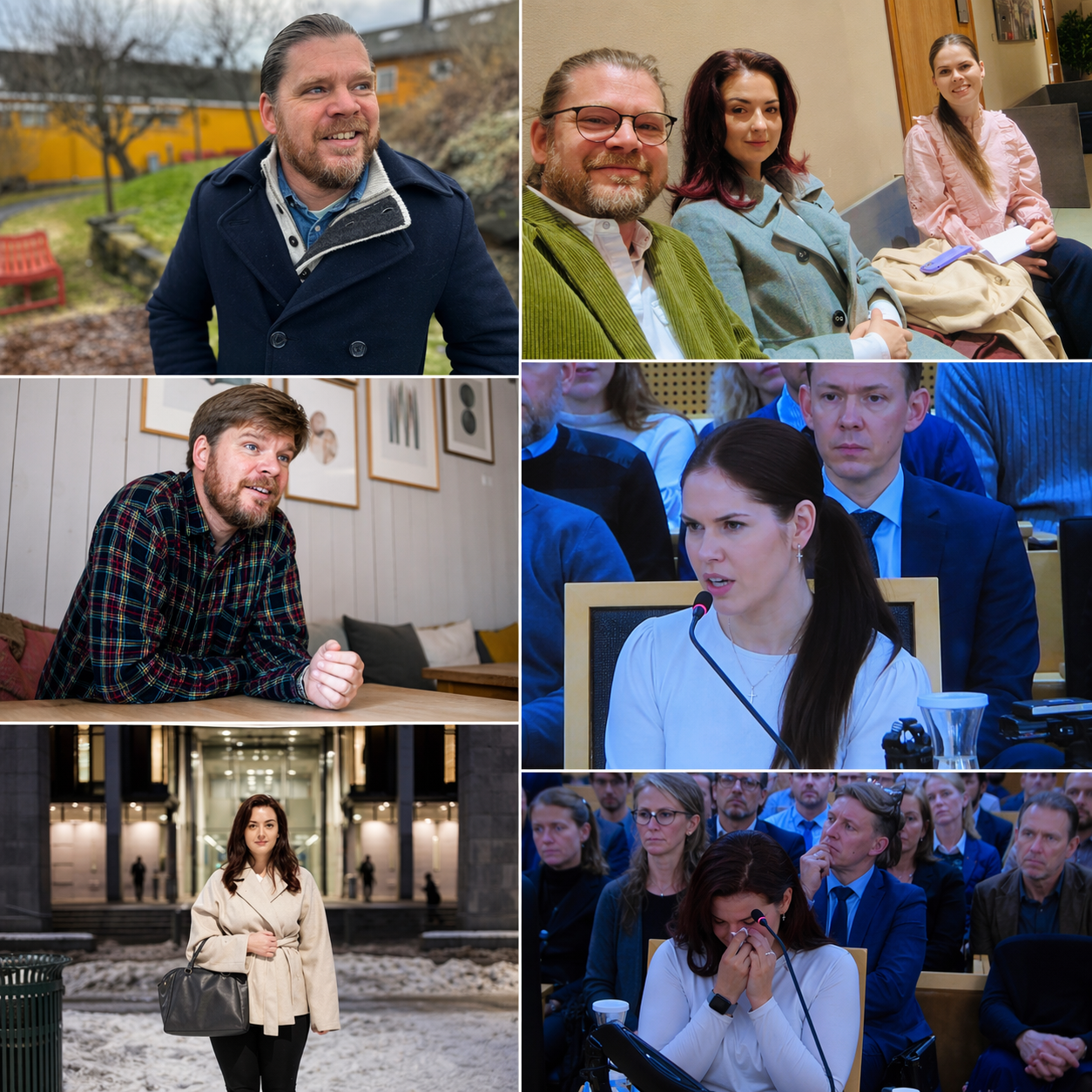
Jan Frode Nilsen, a Former Jehovah’s Witness advocate, repeatedly testified, refusing to let his pain be reduced to bitterness or dismissed as personal grievance. He said plainly that disfellowshipping, not some unrelated life event, was the root of his suffering. He spoke as a father who feared his own children could one day be pressured to shun him if they were in this Organization. He spoke truths that thousands of us former members go through every day. The slow violence of conditional belonging. Click here to see a page of AvoidJW articles on Jan Frode Nilsen.
Jan is a credibility anchor and an emotional bridge to make this change come to life. He’s been physically present during key hearings, standing alongside others who testified, reinforcing that no one was carrying this alone.
Noomi Pilot’s story hit like a bruise pressed too hard. Baptized at 13, and terrified of destruction if she did not conform, she watched her older brother become “a stranger living in the house” after being disfellowshipped.
Later, when she herself was expelled, she described knowing in that instant that she would lose everyone she loved. Years afterward, she was still rebuilding from PTSD, still carrying the wreckage of a life that had to be restarted from the ground up. Her decision to protect her own children by choosing “free will and unconditional love” was more than testimony. It was a generational break in the chain.
Rakel Fjelltvedt showed the court another side of the same wound. She described a childhood where participation was expected, outside friendships were slowly cut away, and leaving meant starting from zero. When she said it was “too tough to stand alone,” she gave language to what so many former Witnesses have lived but struggled to explain: the punishment is not just formal expulsion, but engineered isolation.
Therese brought the courtroom to tears. AvoidJW’s reporting describes half the people who came with her breaking down as she testified about depression, suicidal thoughts, fear of doomsday, bipolar disorder, PTSD, and the crushing lifelong impact of decisions made under pressure.
There were others, too. Hilde Langvann, through Hjelpekilden, represented the broader pattern: people reaching out in fear, in isolation, in trauma after trying to leave high-control religion.
Rolf Furuli, who testified on his decades inside the organization, challenged the idea that shunning is optional or lightly practiced.
For years, Furuli was known for defending the New World Translation (the Jehovah’s Witness Bible) and supporting Watchtower positions with academic rigor.
But over time, his views shifted on the organizational control structures, specifically the authority and decision-making of the Governing Body. He expressed the lack of internal accountability mechanisms and the increasing centralization of doctrinal power.

AvoidJW Comments
AvoidJW’s Norway coverage shows that this legal fight stretched across 16 linked articles and resources, from the 2024 trial to the 2025 appeal and into the 2026 Supreme Court hearing.
To every survivor who spoke up, who showed up, or who simply carried this quietly, we see you. This outcome does not erase your story. It does not diminish what you endured, or the courage it took to stand in a room, in a system, in a world that hasn’t always known how to listen.
Progress is rarely a straight line. Sometimes it feels like a step back. Sometimes it is a step back. But movements are not built on one ruling; they are built on people who refuse to disappear. And that’s exactly what you’ve done.
You’ve put faces to experiences that were once hidden. You’ve shifted a conversation that can no longer be ignored.
You’ve made it harder for silence to survive.
To the advocates: your work matters more now, not less.
To the survivors: your voice didn’t lose today. This moment isn’t the end; it’s a pivot point. Because even when systems hesitate, people don’t have to.
And we’re not going anywhere.
Media Coverage on Norway Supreme Court Verdict
Vartland: The State Took Jehovah’s Witnesses to the Supreme Court. Now the Verdict Has Been Given
JEHOVAH’S WITNESSES: The country’s highest court has ruled on whether the state can deny the religious community state subsidies and registration as a religious community.
Vartland: A crushing verdict on the state
COMMENT: The state has now lost all cases in which it has deprived religious communities of subsidies. This may indicate that the Religious Communities Act is not working. Or that it is.
Ekstra Bladet: Jehovah’s Witnesses in Norway win case in Supreme Court: – It’s sad!
Camilla Trustrup, herself a former member of Jehovah’s Witnesses, has followed the Norwegian trial closely. She finds the decision sad and regrettable.
Fædrelandsvennen– Of course I’m disappointed. But it was a bit like fear.
Jan Frode Nilsen discusses the loss
Vartland: Won in the Supreme Court: – We are grateful
JEHOVAH’S WITNESSES: – It confirms the reputation of Jehovah’s Witnesses as loving, caring, and law-abiding citizens, says the religious community’s spokesperson after they won in the Supreme Court.